Under Armour Design Strategy
(Unofficial Partner)
THE CHALLENGE
Under Armour's brand is deeply tied to early 2000s male youth sports and hardcore athleticism. "Casually active" customers feel unseen, making the brand feel outdated or simply not for them and Under Armour has seen a large decline in popularity.
We redesigned Under Armour's Product Discovery experience to reach this underserved audience: people who want to feel confident and equipped without needing a high-performance athletic identity just to buy workout gear.
Context
Academic +Unofficial Partner Design Strategy Project
10-week strategy + business design engagement.
Skills
Research and Synthesis
Insight Framing
Concept and Ecosystem Strategy
Business Design + Roadmap
FINAL DELIVERABLES
Product Discovery ecosystem
1 Business Blueprint
Team
Ramya Ramaway, Jack Killian,
May Phan, Tiffany Chen, Sam Borri
Understanding the Landscape
Desk Research, Field Observations and Social Listening
We began with secondary research on economic, social, and technological trends shaping the athletic wear industry.
We visited their stores, mainly focusing on their partnership in Dicks to compare their displays and brand voice to the competition. Watching where and how people shopped
Dick's Sporting Goods - Under Armour experience
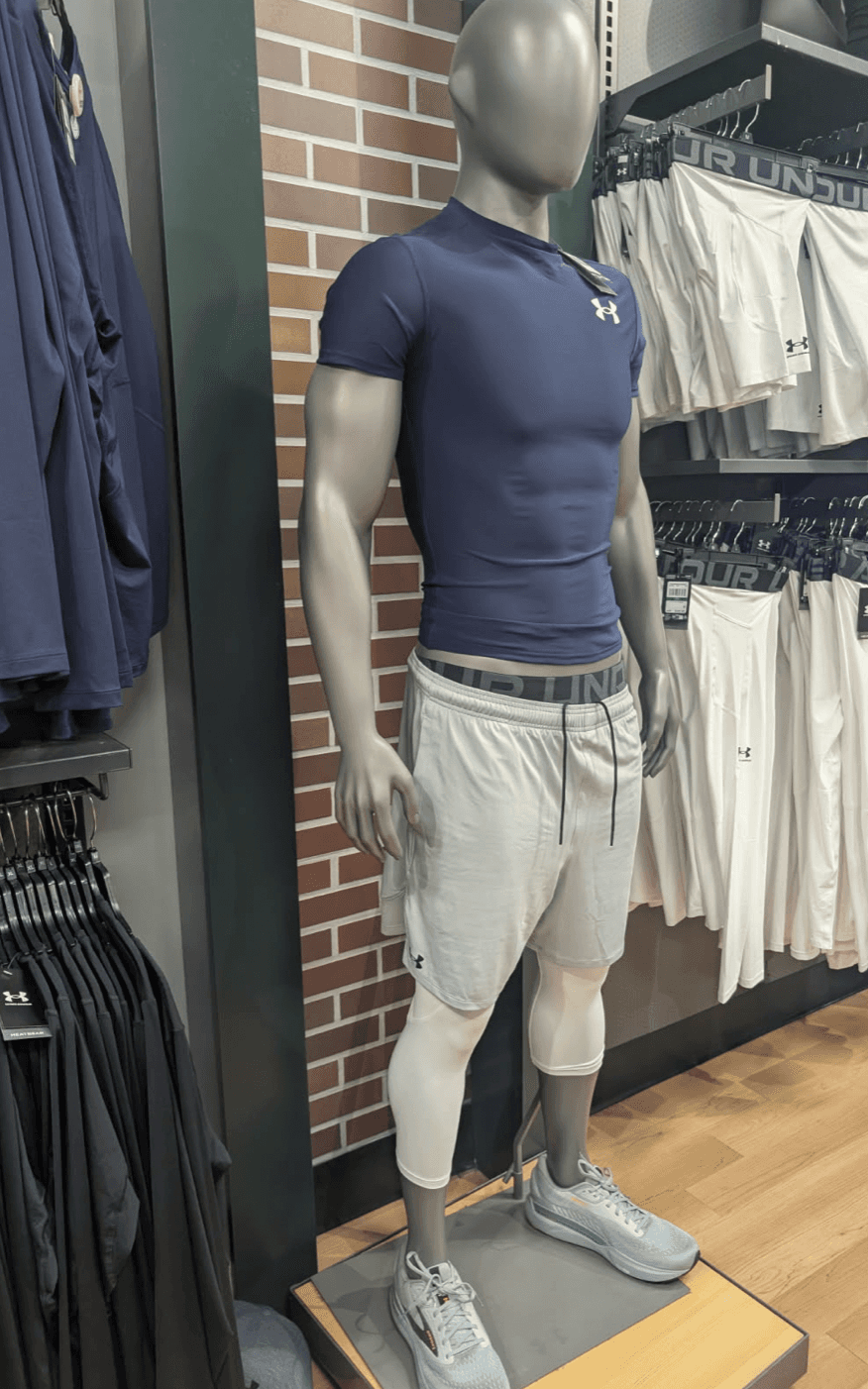
'Buff' build
Mannequins
mannequins had incredibly athletic builds - lacking in diversity
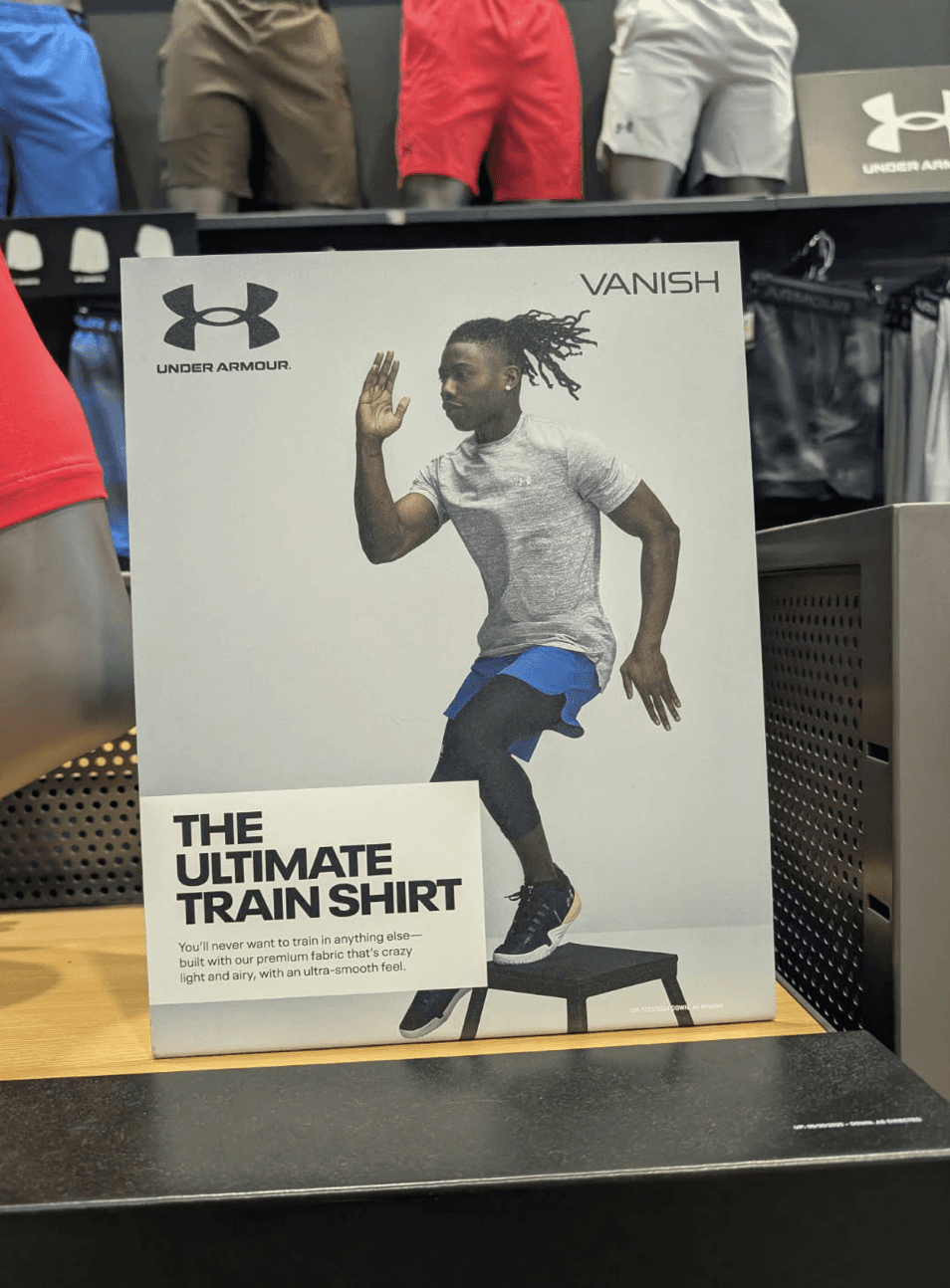
Intense Brand Images
Brand imaging were very male focused and showed only high intensity athletics
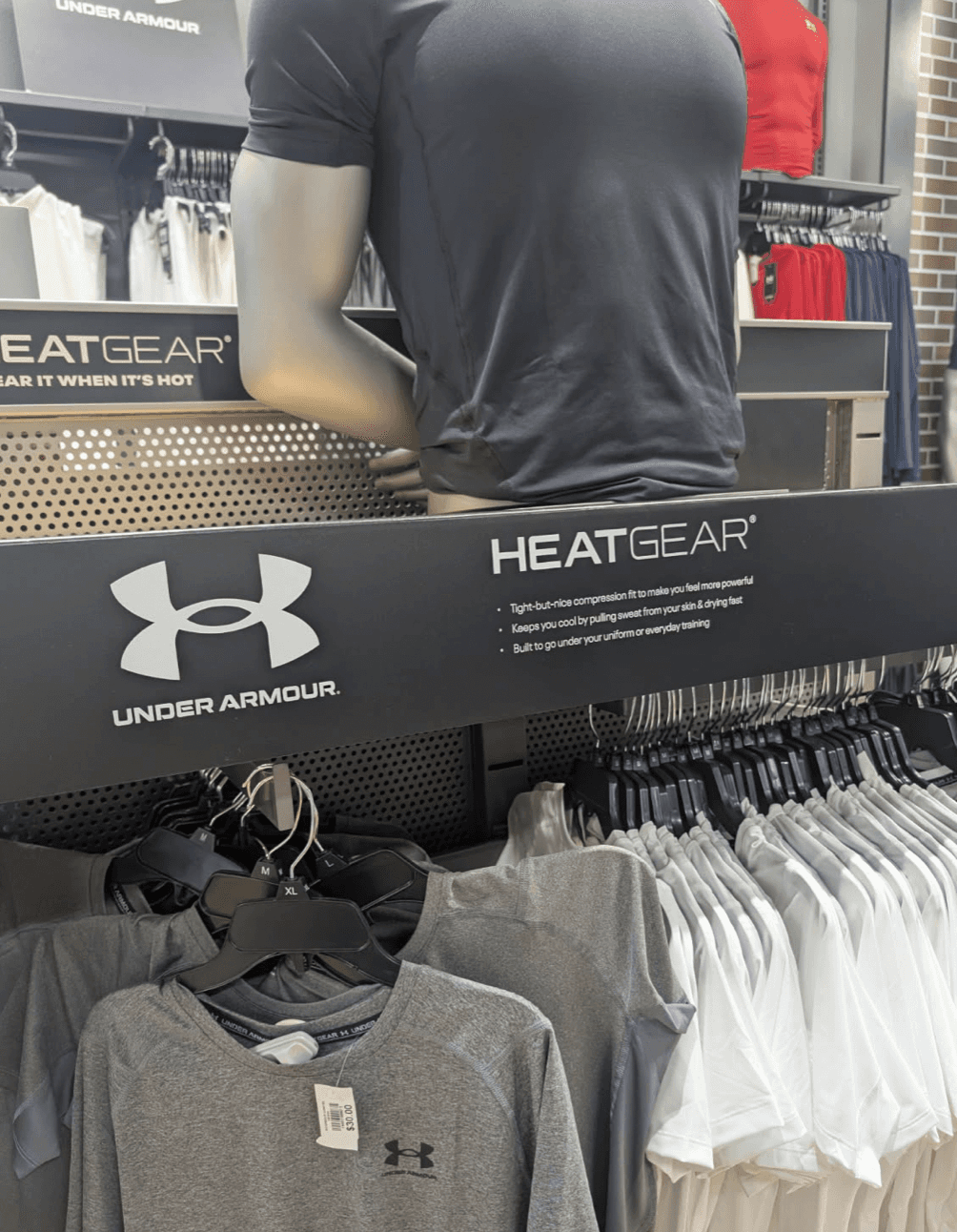
Quiet Tech Messaging
UA offers lots of tech and gear, but it’s mostly explained through written signage that shoppers often ignore.
Understanding people's impressions through online presence
Under armour vs Nike online 'shop' google search
Nike:
Modern, Stylized, Trendy
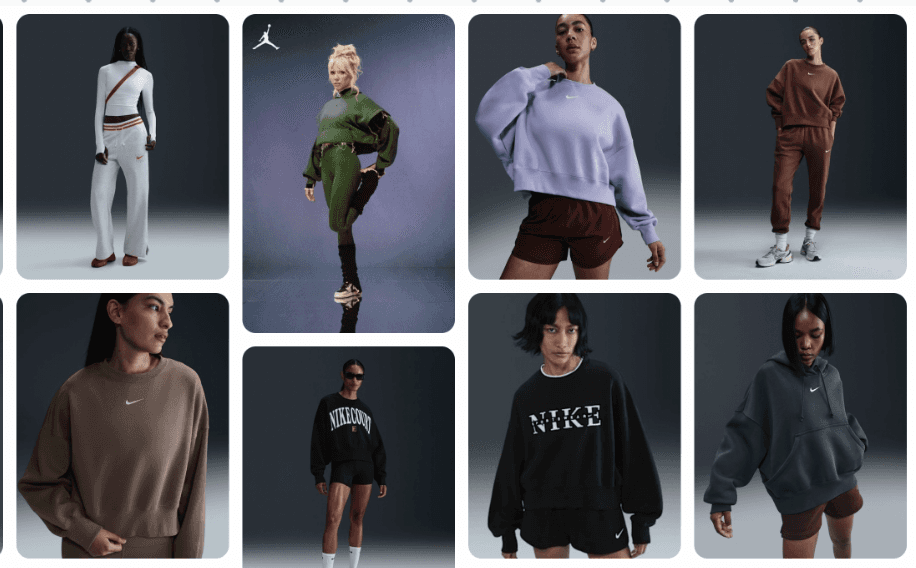
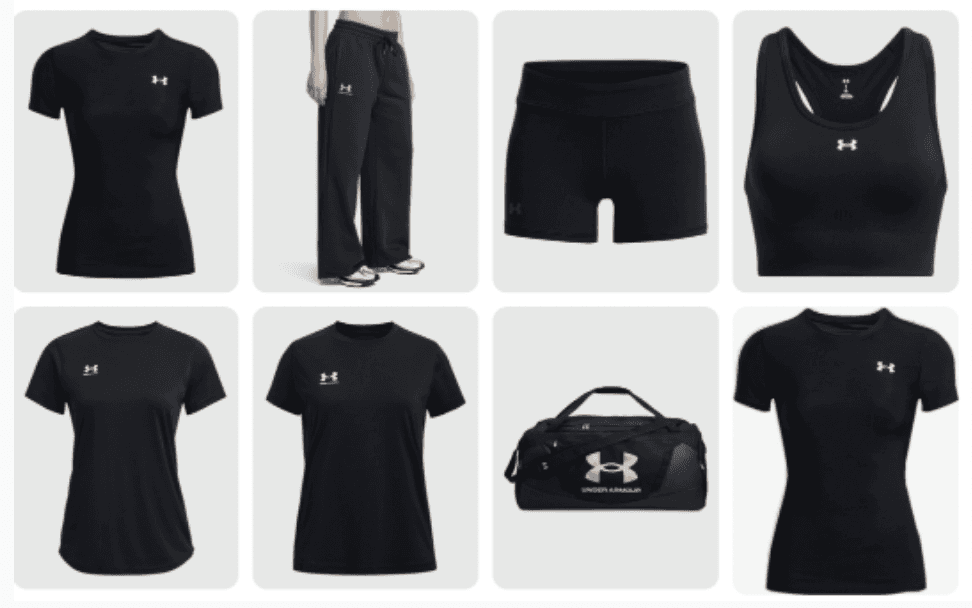
"Under Armour has failed to latch upon streetwear, or sports style that catapulted OnRunning or Hoka or Merrell,” - CNN
Apparel Technology
A strength, underutilized
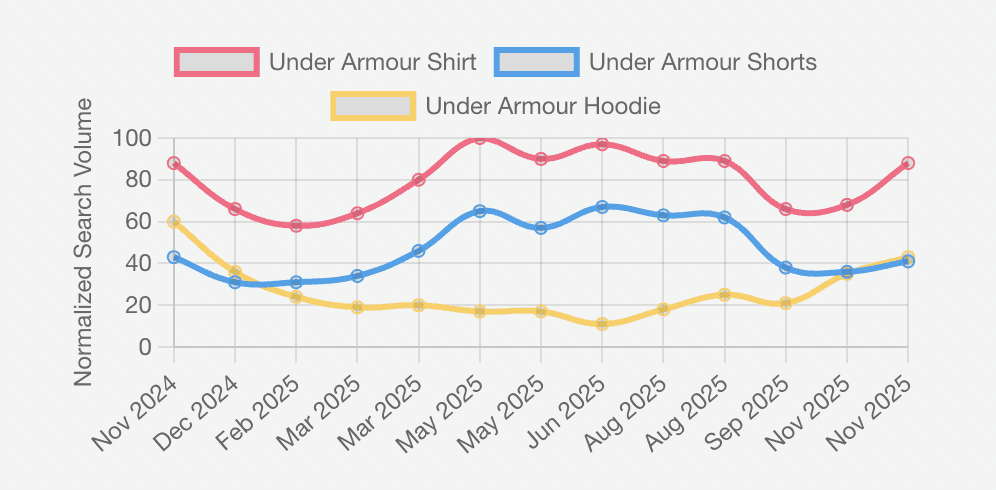
UA's seasonal sales -
their shorts and shirt purchases raising in the summer - showing the popularity of their legacy sweat wicking products
Aligning to Under Armour's Brand
It is important to align our focus and design with the Brand itself
Vision:
"To Inspire you with performance solutions you never knew you needed and can't imagine living without."
Mission
"Under Armour Makes Athletes Better"
Brand strength: UA has strong performance tech and legacy credibility in technical gear - gaining popularity first from their athletic undershirt tech.
Gap: UA is “strong in tech", so much so they have tried to become a 'tech company' -
The lack of focus in translating that into everyday apparel or integrating it into UA's shopping and product discovery experience - especially for people not training like athletes - has left many people feeling lackluster about their brand
Diving into User Research &
Finding Insights
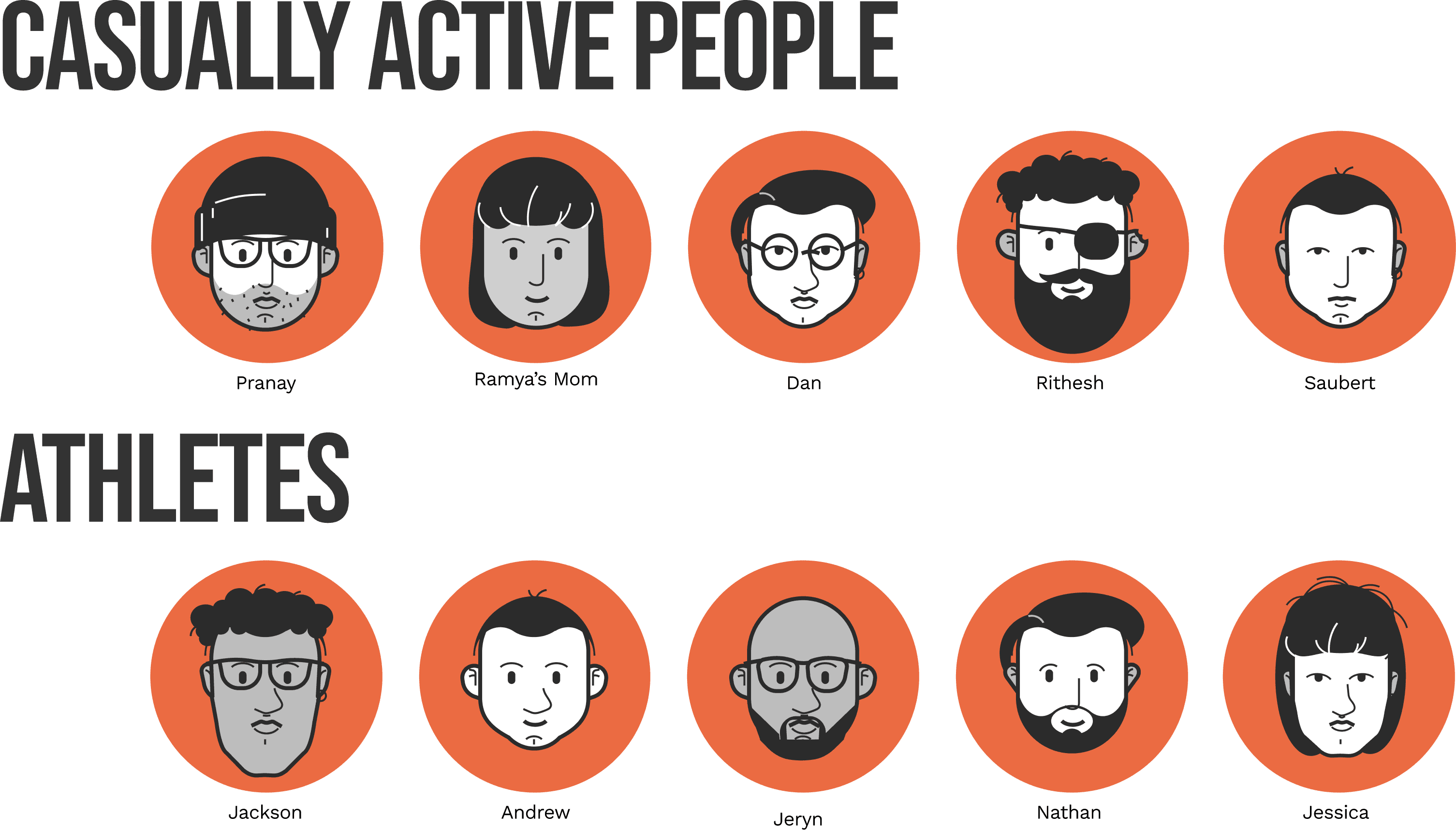
We conducted 30–45 minute semi-structured interviews with a wide range of people
Our goal was to understand shopping behavior, emotional drivers, and why people do or don’t engage with Under Armour.
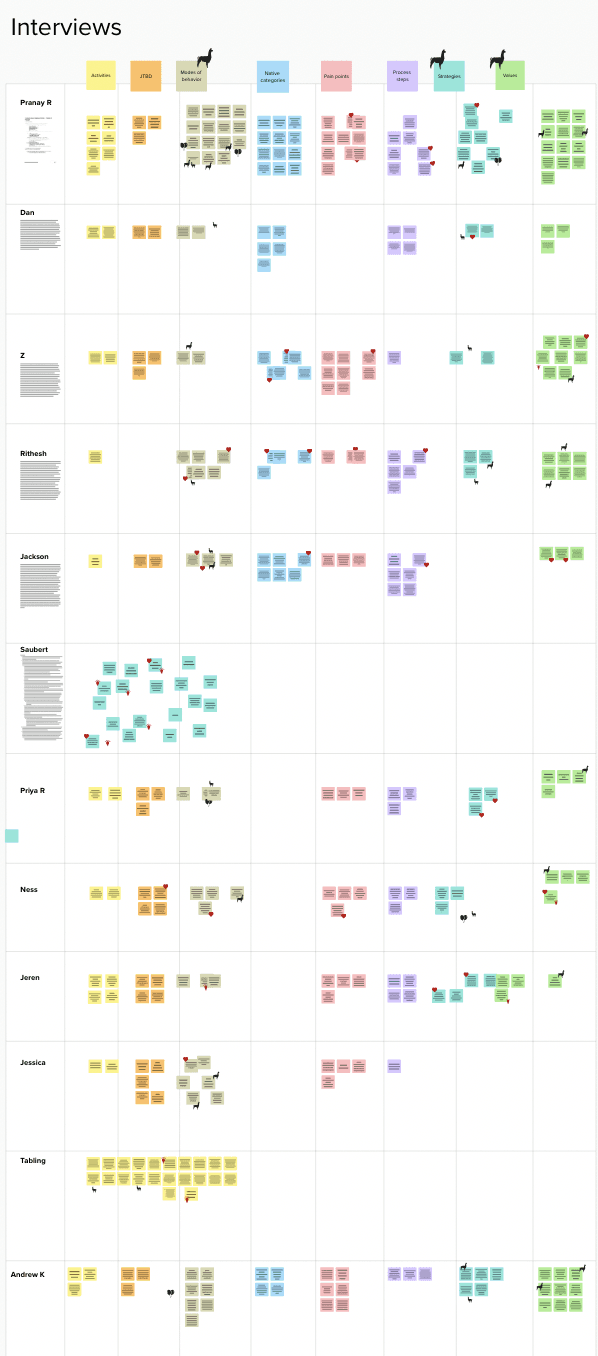
Interview data was clustered into modes of behavior, values, and pain points. We looked for emotional and behavioral patterns rather than surface complaints.
“For men, shopping is a mission. They are out to buy a targeted item and flee the store as quickly as possible.”
-Knowledge at Wharton Staff. “’Men Buy, Women Shop’: The Sexes Have Different Priorities When Walking Down the Aisles.” The Wharton School, 28 Nov. 2007

“I usually just wear whatever my family bought me. Most of it’s business-casual or church clothes, not really stuff I’d choose.”
-Jackson, NU Football Player, Grad Student
Insight 1:
Don’t make me shop
Many men prioritize efficiency, or wait until apparel is gifted to them from loved ones because they see shopping as a task to complete, not an experience, limiting opportunities for brand and product discovery.

“I’ve had this UA hoodie for a really long time, like for a couple years. When I think of UA I think about my sweatshirt, which is very comfy. I wear it a lot.”
-Rithesh, 22 year old college student

“...I think of highlighter yellow tops and being in fifth grade, out on the soccer field.”
-Z, 25 year old Masters student
Insight 2:
Well loved, or worn out?
Men hold onto old athletic wear because it's the only piece in their wardrobe they fully trust. That worn out shirt has already proven it can deliver comfort and confidence, and no new piece can make that same promise yet.
Many people associate UA with their past athletic phase (like high school or college sports), not their current lifestyle.
“Tight fits or bold pieces make me feel a little exposed and self-conscious.”
-Sauburt, 52 year old active Dad
Insight 3:
I’m not the Rock...
Everyday people can't relate to Under Armour’s focus on performance and hardcore athletes, leaving them disconnected from the brand. They want gear that boosts their confidence with unique flair, but doesn't draw attention so they can still blend into the crowd.
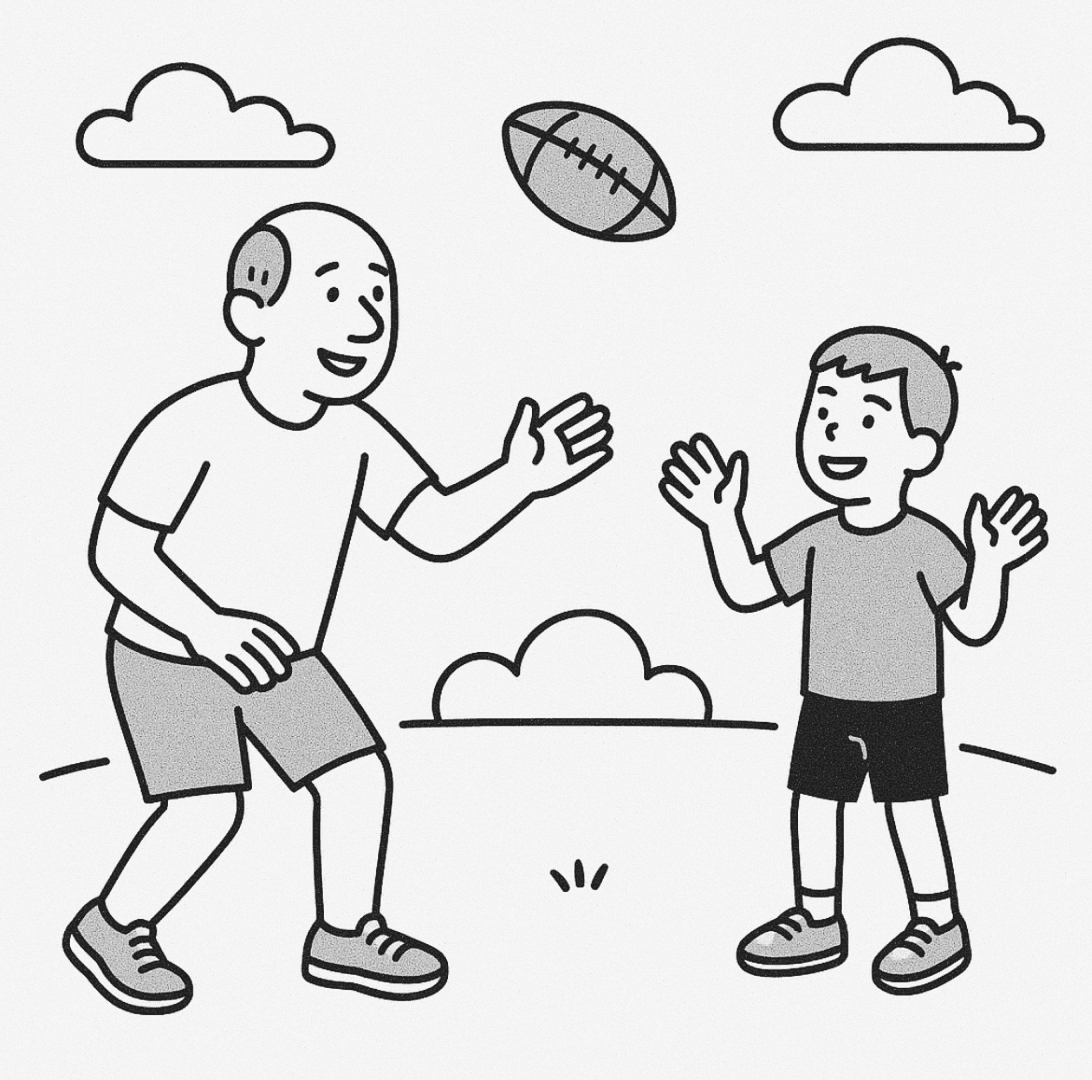
Meet Michael, our target audience, as the research backed representation of the everyday man
Lifestyle
Busy weekday routine
Squeezes in football with his sons
Apparel Habits
Keeps old gym clothes for too long because he knows he feels great in them
Doesn’t feel the need to replace gym clothes
Creating our Framework
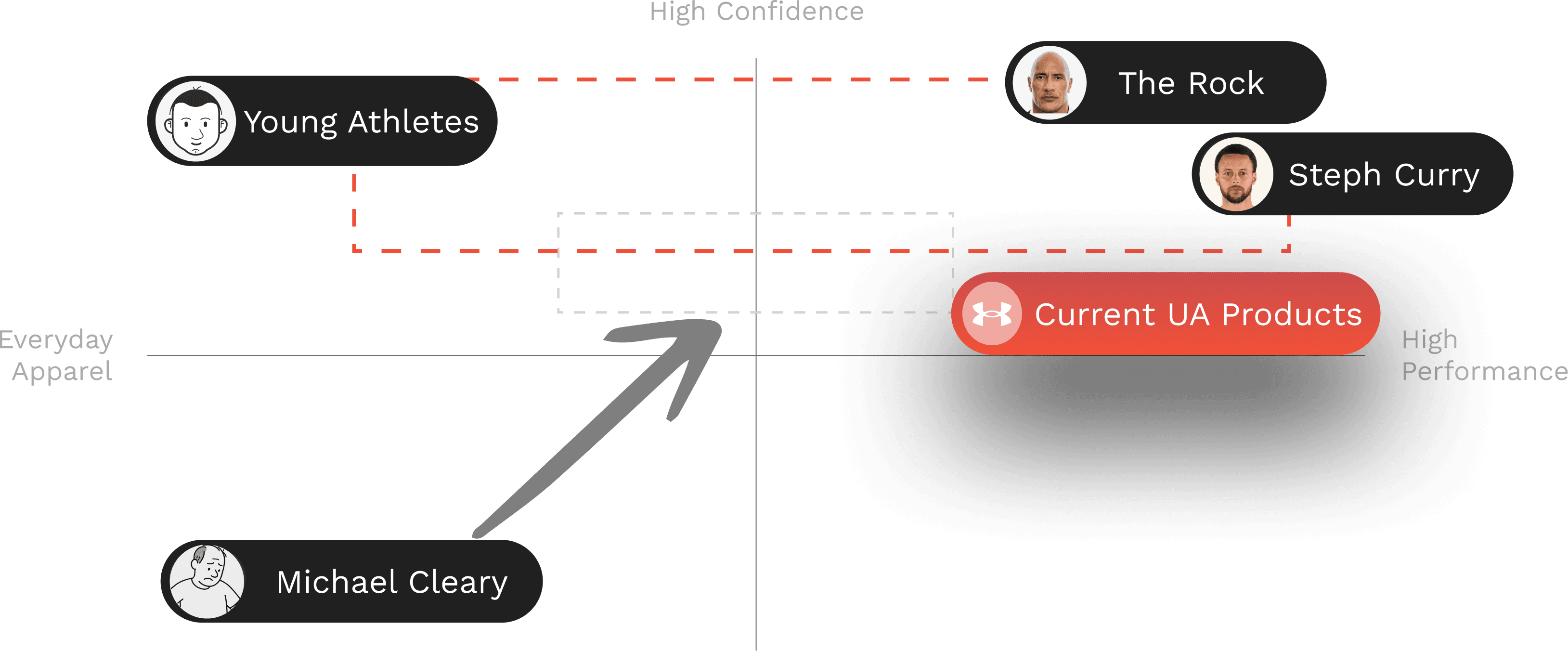
We used a 2x2 (Performance ↔ Everyday, Low ↔ High Confidence) to show UA already owns high-performance + high-confidence, but our target everyday older man sits lower-confidence. Our goal was to bring him into UA’s strength by lifting up our every day man to feel like an everyday confident athlete in our clothes
The Product Discovery Ecosystem
We translated this into a business and experience strategy called The Under Armoury, centered on:
An AI-powered “Scouting Report” fit profile
Curated recommendations for the user or their partner
Try-on boxes and guided in-store experiences
Partnerships with Dick’s Sporting Goods to deliver tech-forward discovery
This leveraged Under Armour’s strengths: high-performance technology, strong male fanbase, and retail partnerships—while solving a real emotional and behavioral problem: decision fatigue and shopping avoidance.
DIGITAL TOUCHPOINT
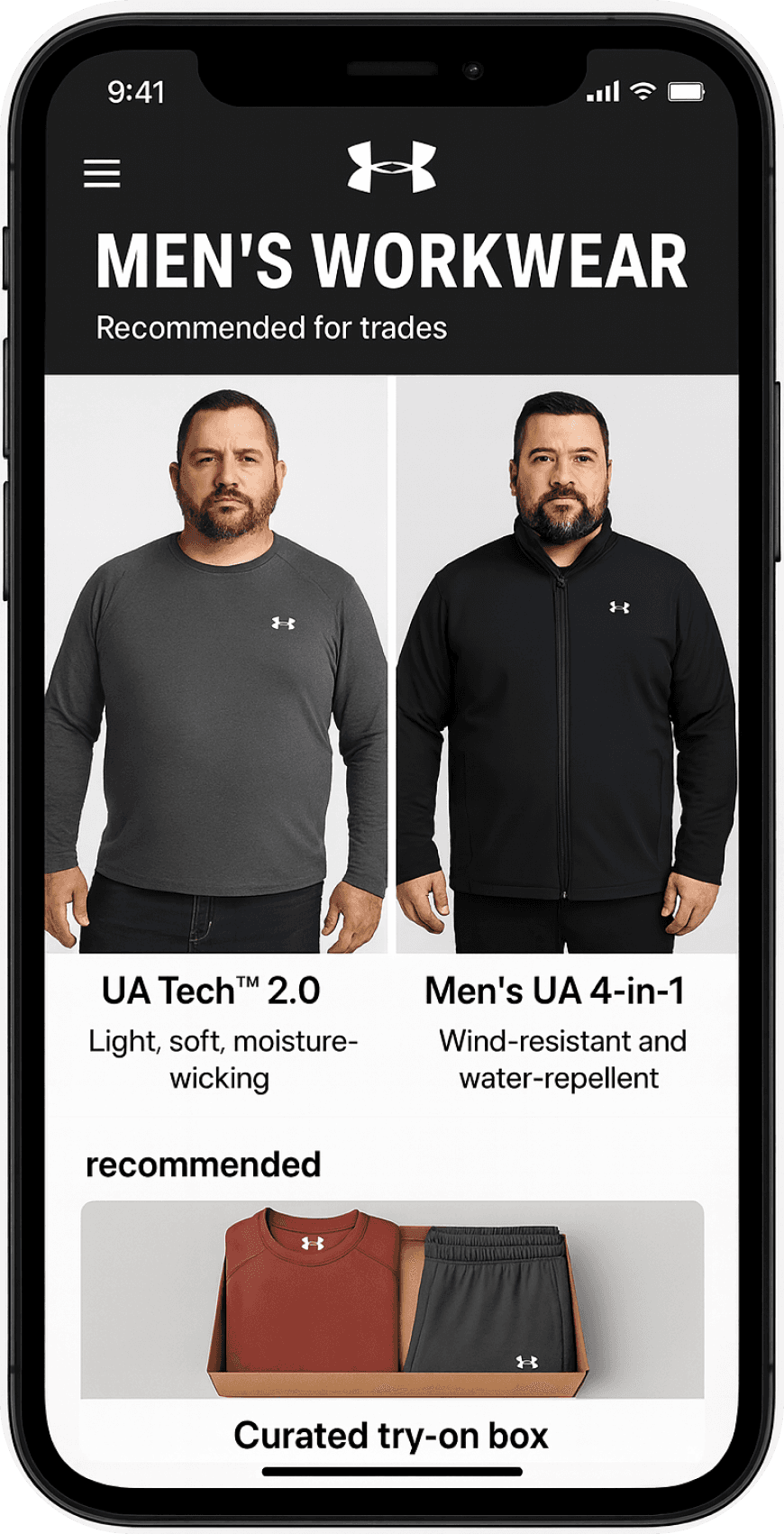
Online Profile/Scouting Report: Remote AI Curation for personalized curation.
Feature Example: Micheal can take a picture of a worn out shirt he loves - one that maybe his wife wants him to replace - and can get a suggested curated replacement suggestion in his preferred size and color
Trial Boxes:
Trial Delivery Boxes that eliminate the stress of figuring out what to wear and having to go out and shop
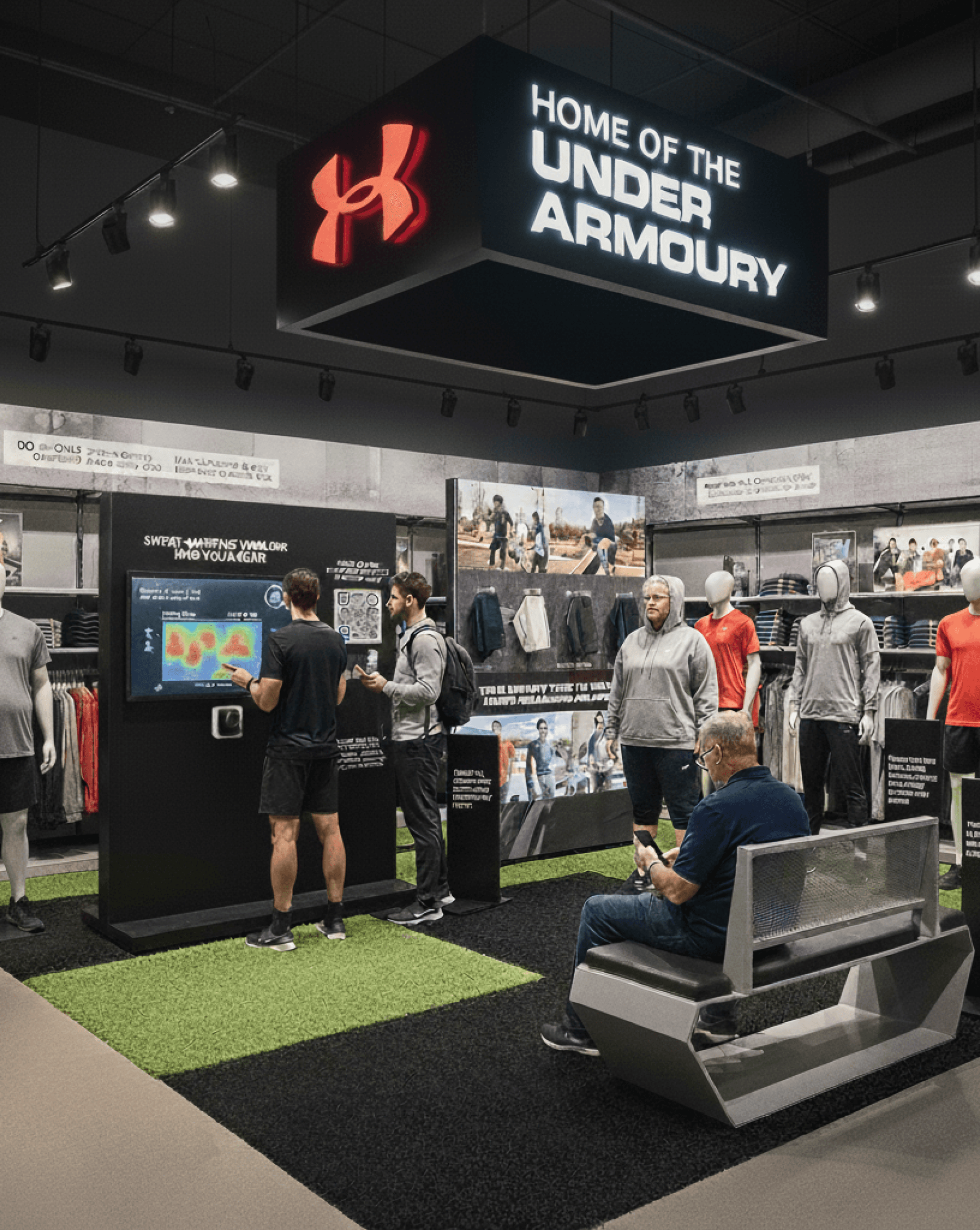
DICKS SPORTING GOODS
Curation touchpoint - try on your online curation pieces in-store
Relatable mannequins with suggested outfits for popular activities ex: beer hockey league and playing football
VIP Heat mapping tech to help find the best pieces for 'sweat spots' during daily and athletic performance
UA AWAY GAME
Trailer Curation Experience
UA Ambassador Dads, with the help of Scouting Report, suggest products that match their physical activity and body
Kiosks for UA employees to sell trial boxes, limited in truck selection, in addition to putting in order for trial box with all items
Return boxes with ease by dropping off the trial box whenever the truck is in a convenient location
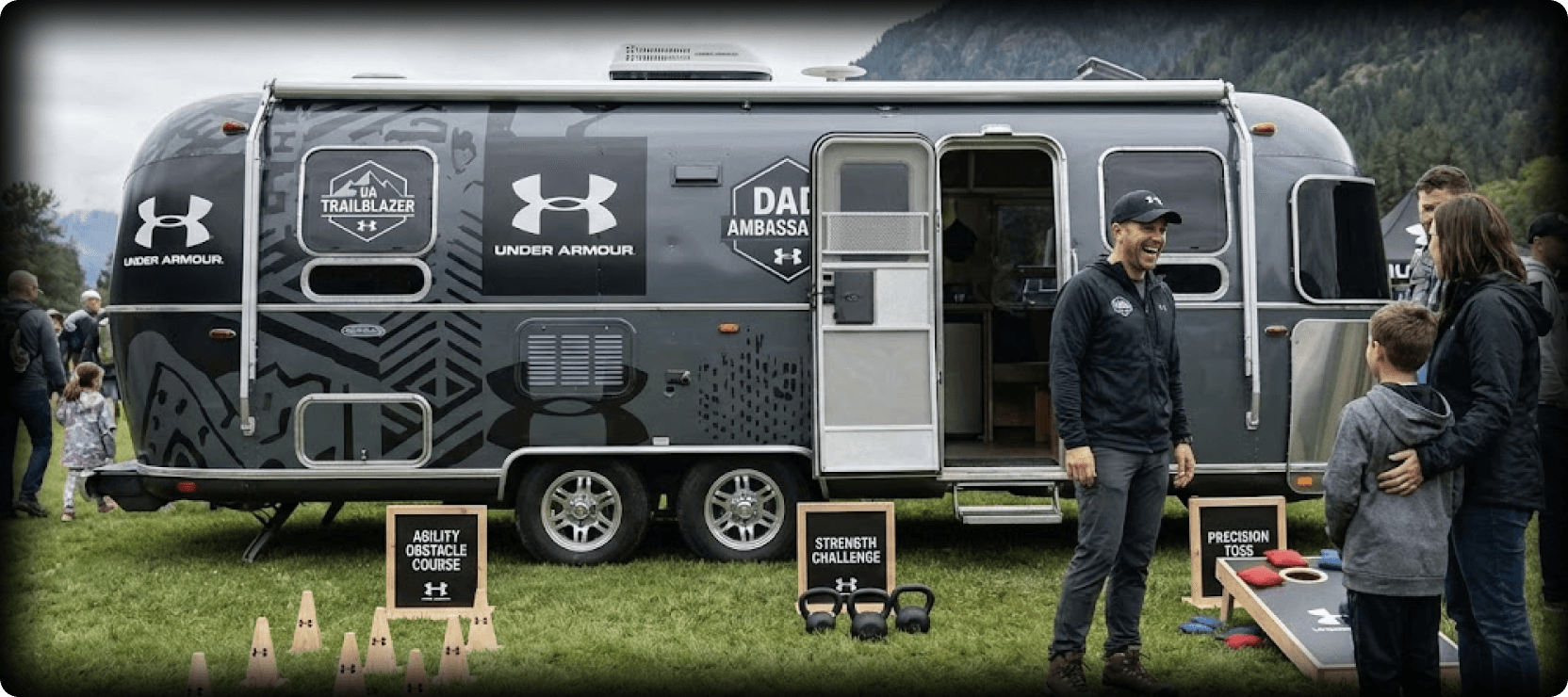
UA AWAY GAME
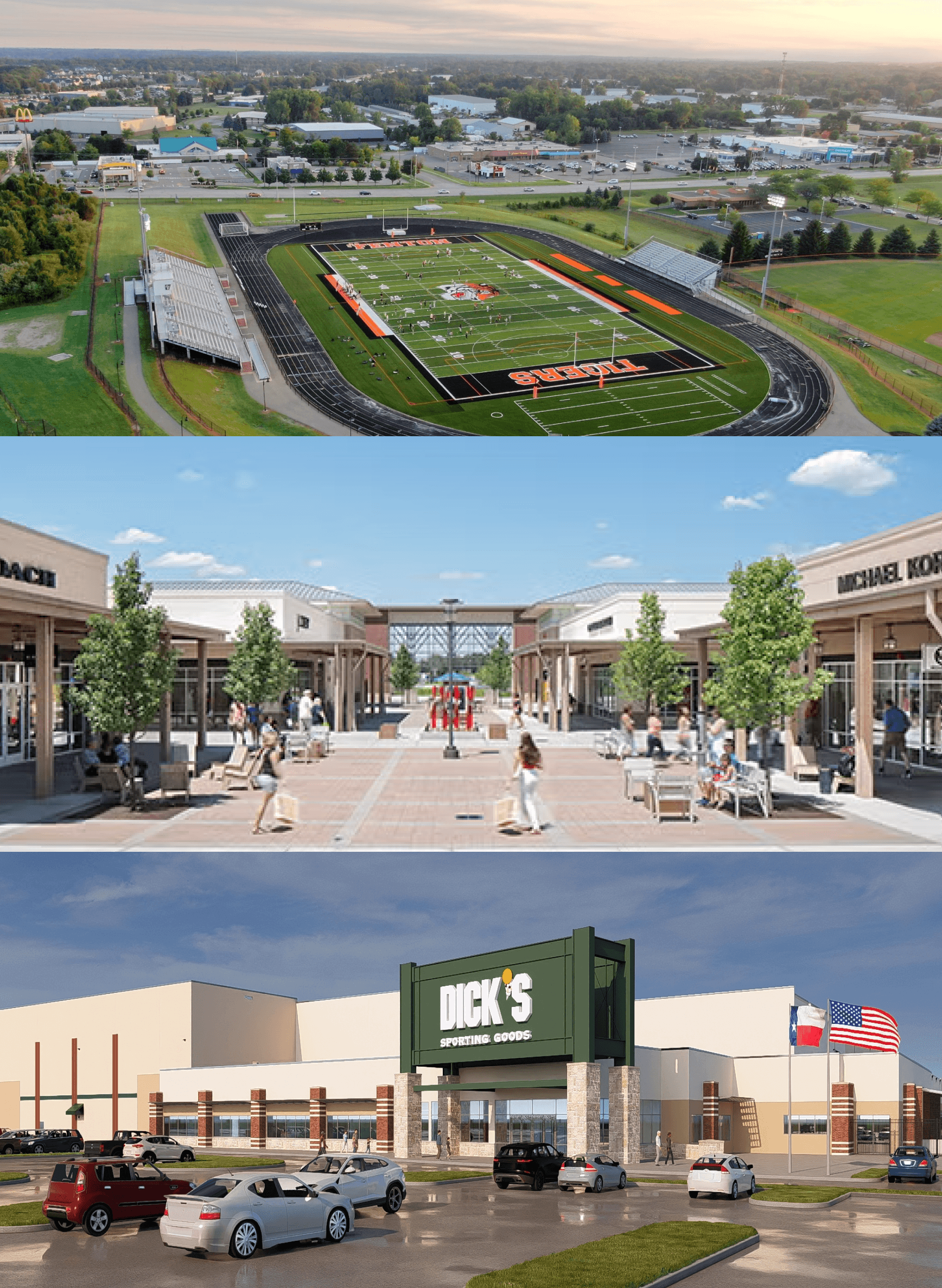
LOCATIONS
Dick’s Sporting Goods partner store parking lots
Parking and plazas in outdoor malls while men wait for loved ones to shop
High school and college sports games, especially partner schools
Building the Business
Value Prop
For Michael, a casually active man like who quietly doubts he belongs in high-performance gear, The Under Armoury empowers him with effortless shopping and trusted gear so he can feel like his favorite athletes and move through life at his best.
Revenue Sources
From UA Away Game
Rent out "hangout" trucks for tailgating
Additional revenue from mobile sales meeting customers where they
From Under Armoury Membership
Subscription for recurring trial boxes
Additional users from family and friends membe rship incentives
From Curation Experiences
Lump sum profit to curate products for entire teams at High School, College, and Professional levels
Professional-level yearly membership revenue from additional curation and customized products for 'VIP' members
From Trial Boxes
Increased product sales
Packaging curation markups
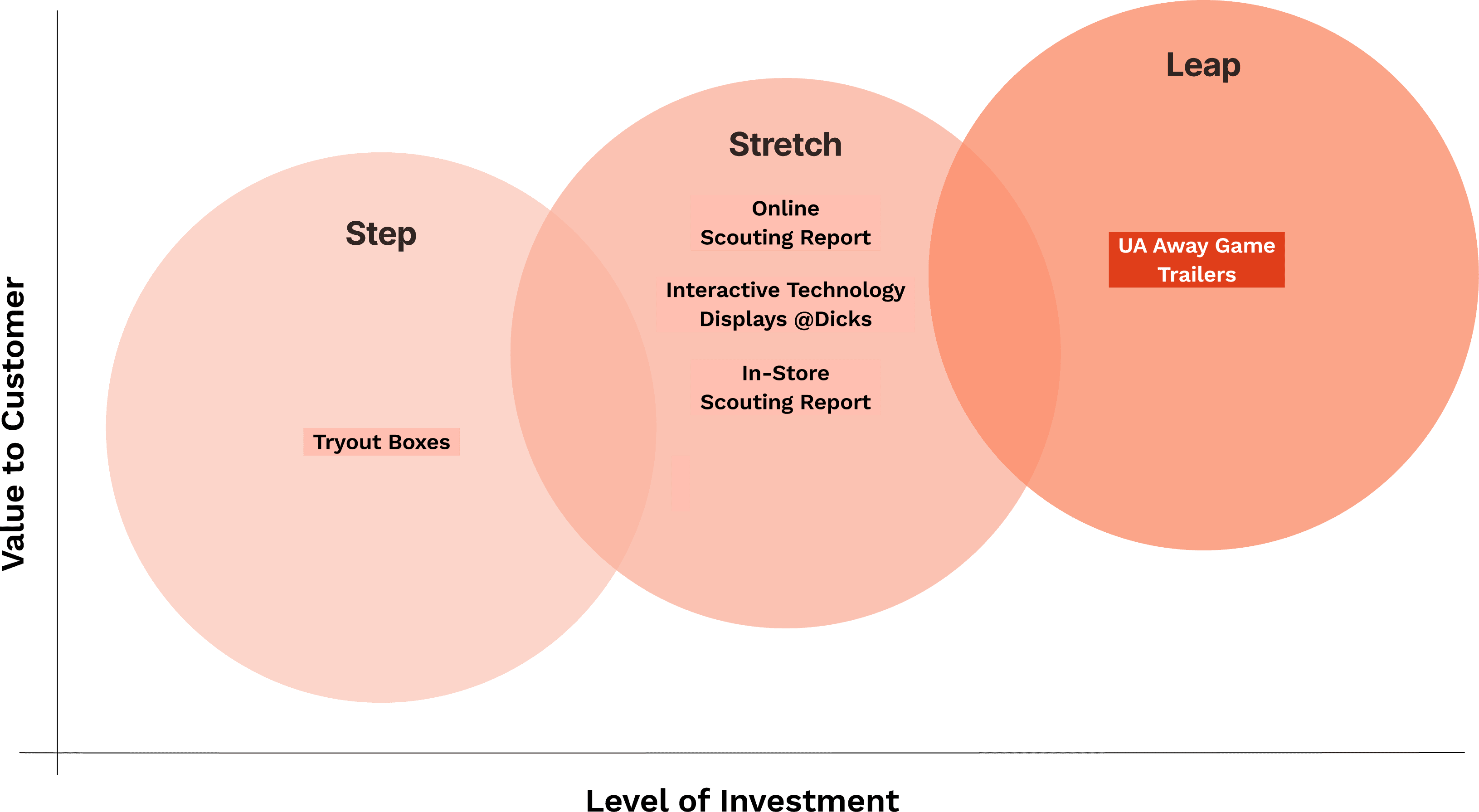
Step - Stretch - Leap
Looking at how we would roll this out - we mapped our strategy based on effort and cost. First piloting with the 'lowest risk' product being the tryout boxes/subscription service. Using our current shipping logistics and manufacturing, we can begin to test out the idea of 'low effort' shopping is of value to our customers.
Building the Business
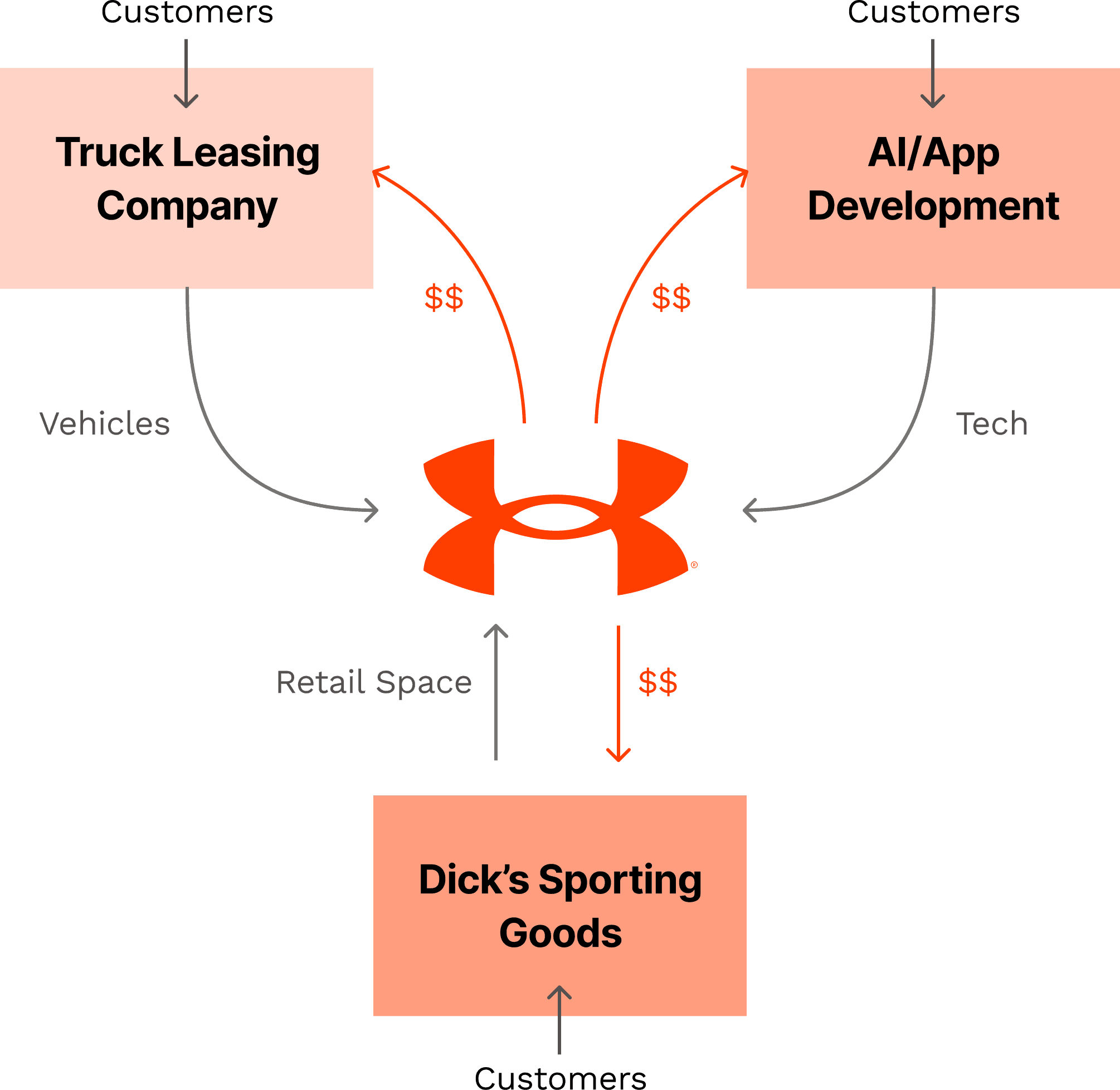
Resource Map
Long term Gains for Under Armour
More predictable revenue through subscription restocks
Richer first-party data on fit, preferences, and usage
Lower return rate based on personalized recommendations
Differentiation from competitor brands through high tech discovery and differentiated market segment
New customer segment of 35-65 year old male demographic + additional sales from easy of gift/shopping for main customer segment
TravisMathew → prediction for Under Armoury success
TravisMathew is a strong analogue for winning the 35–65 “everyday guy” by making shopping feel guided, confidence-building, and low-risk (while staying credible). They’ve scaled to $300M+ net sales and $50M+ adjusted EBITDA (2022). (Shop Eat Surf Outdoor)
1) Guided discovery: “Shop the Look” outfit bundles
What they did (example): Built Look Books + “Shop the Look” modules with bundle discounts and “one-click add to cart,” explicitly designed to boost average basket size. (guidance.com)
How people responded (signal): Guidance reports these bundles helped boost average order value and upsell into full outfits. (guidance.com)
Under Armoury touchpoint: Scouting Report (curated “complete kit”) + Away Game coaches (outfit-level curation in-person).
2) Fit confidence built into product pages
What they did (example): Added Fit Finders, size guides, and model measurements on PDPs to reduce sizing uncertainty. (guidance.com)
How people responded (signal): This reduces the “will this fit?” drop-off that blocks conversion (Guidance frames it as a direct response to common sizing issues). (guidance.com)
Under Armoury touchpoint: Scouting Report (stores fit preferences/constraints) + interactive in-store displays (make tech + fit benefits legible).
Under Armoury touchpoint: Tryout Boxes + with free returns in store and in away game
3) Relatability cues: “dad bod” merchandising (beer-belly mannequin)
What they did (example): Used a beer-belly mannequin as a blunt signal that the brand is for real bodies / real guys—not just athletes. A widely shared thread explicitly calls it a purposeful “fat man” mannequin tied to TravisMathew. (Reddit)
How people responded (signal): It became talkable and shareable—exactly what you want from a retail cue that lowers intimidation and increases “this is for me.” (Reddit)
Under Armoury touchpoint: In-store merchandising system (mannequins / signage / “everyday guy” styling) deployed in dicks sport goods partners + Away Game environments.
How we’ll use this as a success benchmark:
If Under Armoury is working, we should see lift in AOV (bundles), conversion (fit confidence), repeat purchase (low-risk returns/trial), and “this feels like it’s for me” perception among brand-aware everyday men.